Veterinarian Transition: February 2026
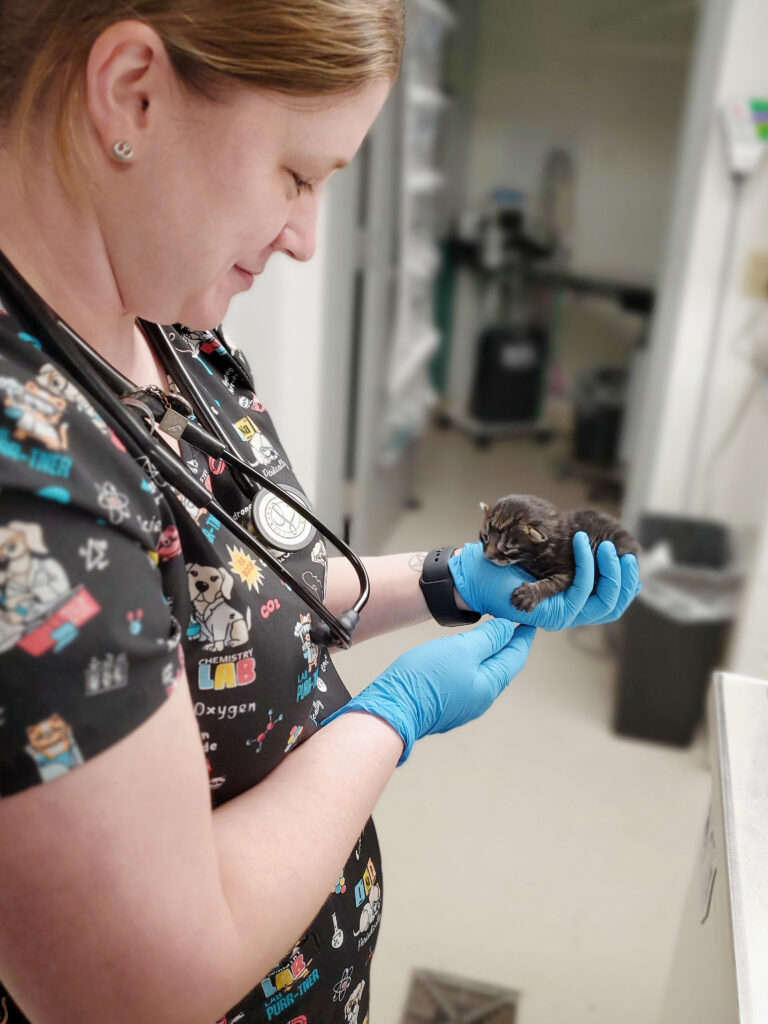
Dr. Pettry has served the Fredericksburg SPCA as our Veterinary in Charge (VIC) for the past three years. We are deeply grateful for her lifesaving work, warmth, and dedication to our animals, staff, partners, and community. Her fun and bubbly presence and willingness to teach will be deeply missed as she transitions to a new position much closer to home. She routinely made a three-hour round trip to serve our shelter, demonstrating extraordinary commitment and love for what she does. We were lucky to have her as a member of our team and community, and congratulate her on her career advancement!
During this transition, we are taking thoughtful steps to maintain medical oversight, regulatory compliance, and quality of care. We hope this information and FAQs helps answer some questions, as we will have to adjust our intakes, services, and programs at this time until a new Veterinarian is hired.
Q: Are you hiring a new veterinarian?
Yes! We are actively working through a thoughtful recruitment and onboarding process for not just one vet, but two veterinarians at this time. Our goal is not just to fill the position, but to strengthen clinic leadership and long-term capacity so we can better serve animals, partners, and the community. We are actively recruiting for a Shelter Veterinarian-In-Charge and a Community Medicine Veterinarian to help expand our services to the community we serve. If you are a veterinarian or know of someone who might be interested, email [email protected] to connect!
Q: Is the clinic closed?
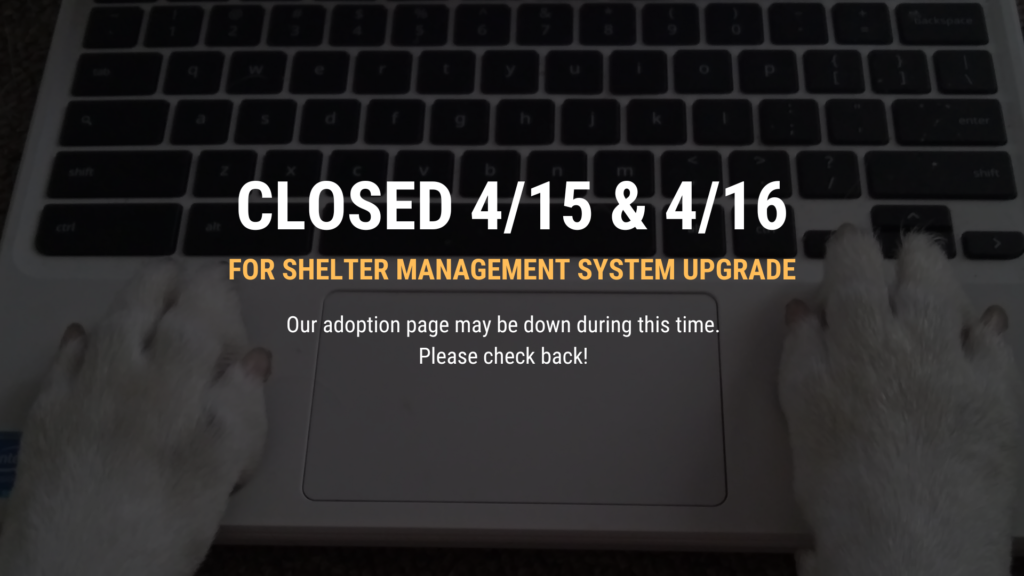
Our Fred SPCA Locke Community Medical Center will temporarily halt all public and partner services as we are actively recruiting a new veterinarian. We are hopeful to resume public services soon and will share updates as we get closer to reopening. We encourage you to check back with us for a clearer timeline, but we will actively post updates on our social media pages and blog.
Q: Are you still accepting animals to the shelter?
During this transition, we must temporarily slow intake and clinic services to maintain appropriate medical oversight and quality of care. Beginning in February, we are managing our intakes to bring in select transfers from partner shelters. Our partner shelters have all been informed of the parameters of our capacity of care surrounding the absence of a veterinarian. At this time, we cannot accept animals that have not been altered or are in need of medical treatment. As capacity allows, we will prioritize urgent and time-sensitive cases and proactively communicate when openings become available.
We deeply value our partnerships and are working diligently to return to full capacity in a way that strengthens our support for high-volume partners and critical cases moving forward.
Q: Are you accepting owner surrenders?
We are temporarily limiting owner surrenders to Fredericksburg SPCA alumni returns only. This allows us to maintain appropriate medical oversight and quality of care for the animals already in our shelter. We will resume broader intake services once our new veterinarian has joined the team.
Q: What should I do if you cannot accept my pet?
We understand how difficult this situation can be. While we are lowering our intakes temporarily, there are certain ways the Fred SPCA can still help, depending on the intake reason. We can:
- Add you to our intake request list (please fill out the form at fredspca.org/rehome)
- Provide behavior support resources through Petcademy
- Provide supplemental pet food and supplies through our pet pantry
- Provide a list of other shelters, rescues, and low-cost veterinary clinics
We are here to help connect you with resources whenever possible. Please email [email protected] to connect with our team for intake diversion resources.
Q: Are the animals at the shelter no longer getting medical care?
This is one of the core drivers of limiting our intake at this time. “Capacity for care” does not simply mean having open kennel space. It means ensuring we have the full range of resources necessary to meet each animal’s medical and behavioral needs to the standard we have established.
At Fredericksburg SPCA, every animal is spayed or neutered prior to adoption and receives age-appropriate vaccinations. In addition, more complex medical needs such as life-saving heartworm treatment, amputations, mass removals, dentals, and sick exams have historically been handled by our in-house veterinarian.
Without an on-site veterinarian currently in place, we are unable to provide that same level of comprehensive care unless we utilize external veterinary partners.
In practical terms, this leaves us balancing three difficult options:
- Limiting intake, which shifts increased responsibility and pressure onto municipal shelters that have historically relied on us for partnership support.
- Intaking animals and fundraising to cover outside veterinary services, which is significantly more costly per animal, ultimately reduces the total number of animals we are able to help.
- Placing animals for adoption with medical waivers, asking adopters to assume responsibility for outstanding medical needs. While this is a common practice in animal sheltering, it is one we have intentionally worked to minimize within our organization.
At this time, we are navigating a thoughtful combination of these approaches. We are limiting intake and diverting when possible, actively fundraising and collaborating with local veterinary clinics for support with unexpected medical cases, and utilizing medical waivers when appropriate to ensure animals can still move into loving homes.
Our priority remains maintaining the quality of care, medical integrity, and long-term sustainability while continuing to serve as many animals as responsibly possible.
Q: Is this transition related to the national veterinary shortage?
Yes, the broader national veterinary shortage is certainly a factor in today’s landscape. Across the country, animal shelters, private practices, and nonprofit clinics are all experiencing increased demand for veterinary services alongside a limited pool of available veterinarians.
This shortage has created a highly competitive hiring environment, particularly for shelter medicine roles, which require specialized experience and a unique commitment to high-volume, high-impact care. We are actively exhausting all recruitment resources for this priority role.
Q: How Can Our Community Help Right Now?
We have never been able to accomplish the work we do alone, and this transition is no different.
You can make an immediate impact by supporting any medical fundraisers that may arise or making a donation through our donate page, as increased reliance on outside veterinary providers means higher per-animal medical costs. Every donation directly affects how many animals we’re able to treat and place into homes.
Fostering is another powerful way to help. Providing a temporary home gives shelter pets a break from the kennel environment, reduces stress, and often helps them find adoptive families faster. Fostering also expands our overall capacity for care.
As we approach kitten season, community education is especially critical. Due to limited veterinary capacity, we will likely be unable to accept neonatal kittens at the door like we have in the past. Helping us spread the word about kitten season, proper intervention guidelines, and avoiding unintentional “kit-napping” will save lives and put less stress on rescues and other shelters in the area. The more informed our community is, the more kittens can safely remain with their mothers or receive appropriate care when truly needed.
Together, through education, fostering, and financial support, our community can help us continue serving animals responsibly and compassionately.